
10 Indie Fantasy & Sci-Fi Authors With Combat Expertise Who Write the Most Realistic Action Scenes

A curated guide to the speculative fiction writers whose martial arts training, military service, competitive athletics, and weapons expertise produce action scenes that feel dangerously real.
10 Indie Fantasy & Sci-Fi Authors With Combat Expertise Who Write the Most Realistic Action Scenes and that headline is not hyperbole. Every author on this list brings verified, real-world combat or athletic expertise to the page.
Most speculative fiction treats action scenes as: choreography borrowed from cinema, damage modeled on video-game hit points, and stamina that conveniently resets between chapters. The result is combat that looks impressive in outline but pales under scrutiny. Real fighting—whether with blades, fists, or armored vehicles—is governed by physiology, fear, accumulated fatigue, and split-second tradeoffs that untrained writers rarely capture.
The authors below close that gap. Their backgrounds span professional-level athletics, Brazilian Jiu-Jitsu, historical swordsmanship, Jeet Kune Do, armored-cavalry warfare, theoretical physics, and infantry doctrine. When they write a character gasping through a redline sprint, absorbing a guard pass, or suppressing a corridor, the scene works because the author has lived some version of it.
What follows is a deep-dive into each indie author's expertise, the books that showcase it, and the specific techniques that make their action writing stand apart. Here are 10 Indie Fantasy & Sci-Fi Authors With Combat Expertise Who Write the Most Realistic Fight Scenes
01
Izaic Yorks Fantasy · Science Fiction

A professional silver-medalist track athlete and trained military saber/smallsword practitioner who channels elite performance physiology and historical blade mechanics into every action sequence.
Background Expertise
Yorks is a former championship-winning middle-distance runner whose competitive career reached the medal podium at the professional level. Beyond athletics, he trains in judo, military saber and smallsword—weapons that demand precision, line control, and an understanding of committed versus probing attacks. The combination of elite anaerobic conditioning and edged-weapon practice gives him an unusually broad physical vocabulary to draw from.
Notable Works
Redline (bioengineered science fiction thriller) and upcoming release The Paladin's Apprentice trilogy represent two distinct deployments of his expertise. Redline is positioned as a novel "crafted for readers who love fast reading with big ideas, philosophical questions," built around the premise of a body pushed to engineered extremes. The Paladin's Apprentice series blends faith-driven narrative with technically grounded swordplay and physical endurance.
How Realism Appears in the Writing
In Redline, the bioengineered-thriller premise lets Yorks model realistic physical limits—lactic burn, oxygen debt, and tactical pacing—during high-speed chases, races, and fights. Characters accelerate, redline, and recover in patterns that track closely with what an elite runner experiences during anaerobic intervals and race-day surges. The kinetic pacing of scenes mirrors the rhythm of competitive middle-distance events: controlled output, explosive bursts, and the inevitable physiological cost of sustained intensity.
In The Paladin's Apprentice, fights emphasize footwork, timing, and progressive fatigue over abstract damage systems. Fast early exchanges give way to sloppy defenses, cramped muscles, and mental errors—mirroring how form degrades under maximal effort in competition. His sword training surfaces in tight, angle-driven choreography: feints, binds, and cuts are described as sequences of small positional advantages rather than broad cinematic swings. The prose notes line, range, and the tactical difference between committed attacks and probing actions in a manner consistent with trained fencing.
Why Their Action Scenes Feel Real
Stamina and recovery are treated as finite, measurable resources
Sword choreography is built on positional advantage, line control, and historical blade mechanics rather than spectacle
Pacing within scenes mirrors the rhythm of competitive athletics: bursts, oxygen debt, tactical restraint
Physical degradation (cramping, form breakdown, mental error) is progressive and realistic
The fusion of elite-athlete physiology and weapon training produces action writing with an unusually broad physical vocabulary
02
Alexander Darwin Fantasy · Martial Arts

A Brazilian Jiu-Jitsu brown belt who trains and teaches at Boston BJJ, building an entire fantasy world around realistic grappling and MMA combat.
Background Expertise
Darwin holds a BJJ brown belt under Roberto Maia and Ralph Gracie lineage at Boston Jiu-Jitsu, where he both trains and teaches. His introduction to Brazilian Jiu-Jitsu came over twelve years ago, giving him deep experiential knowledge of positional hierarchy, submission mechanics, and the energy management required to compete at an advanced level.
Notable Works
The Combat Codes and the broader Combat Codes Saga form his primary body of work—a fantasy series built around professional fighters called Grievar who settle disputes through hand-to-hand combat in an arena known as the Circle.
How Realism Appears in the Writing
Fights in the Combat Codes Saga read like realistic grappling and MMA bouts transposed into a speculative setting. Level changes, guard work, submissions, and positional hierarchy all function as they would on a real mat. Energy management across multi-round encounters mirrors the pacing and tactical conservation that experienced grapplers employ in competition. Reviewers consistently note that Darwin's BJJ background provides both the technical vocabulary to choreograph a dense volume of fight scenes and the psychological framework to depict training arcs, tournament pressure, and the cost of fighting through injury.
Why Their Action Scenes Feel Real
Grappling sequences follow real BJJ positional hierarchy and submission mechanics
Energy conservation and tactical pacing reflect advanced competitive experience
Training arcs and tournament psychology are drawn from lived experience on the mat
Twelve-plus years of practice gives the prose a granular technical confidence rare in fantasy
03
Matthew Woodring Stover Fantasy · Sci-Fi

A long-time practitioner of Degerberg Blend—a Jeet Kune Do–concept system mixing roughly twenty-five fighting arts—whose Caine novels are a masterclass in violence as character revelation.
Background Expertise
Stover studies the Degerberg Blend, a Jeet Kune Do–concept system that synthesizes approximately twenty-five different fighting arts. This eclectic martial foundation gives him fluency across striking, grappling, and weapons work, and it directly shapes the acclaimed fight scenes in his novels.
Notable Works
Heroes Die, Blade of Tyshalle, Caine Black Knife, and Caine's Law comprise the Acts of Caine series—grim, violent novels that have earned cult status for their unflinching combat writing.
How Realism Appears in the Writing
The Caine books describe how leverage, angles, and intent matter more than brute strength, and how adrenaline, fear, and pain warp decision-making in close combat. Stover's own philosophy of effective fight writing centers on scenes that "illuminate character, advance the plot, and address the story's underlying themes at a fever-pitch of vicarious adrenaline." The Caine duels and beatdowns execute that philosophy precisely: every exchange reveals something about who the fighter is and what they are willing to sacrifice.
Why Their Action Scenes Feel Real
Combat functions as character revelation, not spectacle—each fight advances theme and plot simultaneously
Multi-art martial background produces biomechanically grounded choreography across weapons and empty-hand fighting
Psychological realism—adrenaline, fear, and pain—shapes tactical decision-making within scenes
Leverage, angles, and intent consistently outweigh brute force in the narrative logic of combat
04
David Drake Military Sci-Fi
A Vietnam War veteran whose armored-cavalry service made Hammer's Slammers one of the most authentic depictions of mechanized warfare in science fiction.
Background Expertise
Drake served in the Vietnam War in armored cavalry, and that experience permeates every aspect of his military science fiction. His understanding of suppression, logistics, civilian impact, and the psychology of professional soldiers under fire comes from direct observation, not research.
Notable Works
The Hammer's Slammers series remains his defining contribution—a body of work praised for its "veteran's eye for the harsh and gritty details of war," depicting futuristic tank and hovercraft warfare that reads like real armored engagements transposed into science fiction hardware.
How Realism Appears in the Writing
The Slammers are depicted as "competent professionals engaged in a deadly business," and that framing governs how every firefight and bombardment unfolds. Battles hinge on procedure, rules of engagement, and tactical tradeoffs rather than heroic spectacle. Suppression, logistics chains, and the friction between operational goals and ground-level chaos all feature prominently. The psychological weight of professional soldiering—boredom, hypervigilance, moral compromise—saturates the narrative between engagements.
Why Their Action Scenes Feel Real
First-hand armored-cavalry experience grounds every tactical decision and procedural detail
Battles emphasize suppression, logistics, and rules of engagement over individual heroics
Soldiers are depicted as professionals, not archetypes—with all the moral complexity that implies
The psychological texture of sustained military operations (boredom, hypervigilance, moral fatigue) is present between and during engagements
05
Travis S. Taylor Military Sci-Fi · Tech

A multiple-PhD physicist and advanced weapons researcher whose science fiction fights obey the laws of physics because the author helped write them.
Background Expertise
Taylor holds multiple PhDs and is described as "one of the leading minds in the world of theoretical physics"—the figure media outlets consult when discussing future weapons and warfare technology. His professional research in advanced weapons systems and battlefield engineering gives him direct technical authority over the hardware in his fiction.
Notable Works
One Day on Mars delivers what has been called "300 pages of high-tech science fiction fighting"—a novel dense with tanks, mechs, powered combat suits, and orbital hardware, all governed by physics rather than handwaving.
How Realism Appears in the Writing
Mechs and powered suits in One Day on Mars move and hit in ways that feel mechanically grounded: force, momentum, and battlefield communications are modeled as realistic extrapolations of current engineering, not as fantasy conceits. Weapons effects, targeting interplay, and the constraints of operating in different environments (ground, orbital, urban) are treated as hard problems with real consequences. The novel reportedly contains "more explosions per capita than most real wars" while maintaining believability—a balance only possible when the author understands the underlying physics.
Why Their Action Scenes Feel Real
Weapons effects and mech movement obey real physics—force, momentum, and inertia are modeled, not ignored
Professional weapons-research background gives the hardware genuine technical plausibility
Battlefield communications and targeting systems function as constrained systems, not magic
High action density is sustained without sacrificing mechanical coherence
06
Marko Kloos Military Sci-Fi
A German-born author with deep military-culture literacy whose Frontlines series is a benchmark for grounded infantry action in science fiction.
Background Expertise
Kloos is widely recognized in military science fiction communities for his close familiarity with military culture and small-unit tactics. His Frontlines novels are a recurring recommendation when readers seek science fiction with realistic infantry combat, and his attention to weapon handling, doctrine, and operational procedure reflects sustained engagement with modern military practice.
Notable Works
Terms of Enlistment and its sequels (the Frontlines series) follow an infantryman through a career of ground engagements, urban assaults, and shipboard fights, with combat forming the structural backbone of each novel.
How Realism Appears in the Writing
Frontlines depicts infantry engagements with consistent attention to cover, suppressive fire, weapon handling, exhaustion, and logistics. The series tracks with modern infantry doctrine: fire-and-movement, bounding overwatch, and the friction of operating in urban terrain all appear organically. In reader recommendation threads asking for science fiction with "exciting combat (space/ground)," the Frontlines series is a go-to answer, underscoring how much of each novel is devoted to realistic-feeling operations.
Why Their Action Scenes Feel Real
Infantry engagements follow recognizable modern doctrine—cover, suppression, fire-and-movement
Weapon handling and operational logistics are treated as integral, not background
Urban and shipboard combat scenarios respect the constraints of confined environments
Exhaustion and supply limitations shape outcomes as much as firepower
07
Neal Asher Space Opera · Combat Sci-Fi

An author whose engineering-adjacent technical depth turns space opera into a simulationist wargame—complete with sensor ranges, reaction times, and network-warfare constraints.
Background Expertise
While Asher's background leans technical and engineering-adjacent rather than overtly military, readers consistently praise the granular detail of his combat writing. His understanding of weapons systems, kinetic consequences, and networked-warfare limitations places his work firmly in the hard-SF combat tradition.
Notable Works
Gridlinked and the Agent Cormac series, along with The Owner series, are his primary combat-focused works. Readers describe the entire Agent Cormac sequence as "brutal war" with "awesome cybercombat."
How Realism Appears in the Writing
Ship-to-ship combat, drone warfare, and powered-armor engagements in Asher's novels hinge on sensor ranges, reaction times, and weapons effects rather than narrative convenience. Ground engagements and cybercombat frequently turn on specific technological constraints—lag, bandwidth, targeting-system limitations—that mirror realistic constraints in modern networked warfare. The result is a simulationist feel where battles function as complex systems rather than set-piece spectacles.
Why Their Action Scenes Feel Real
Battles hinge on sensor data, reaction windows, and weapons effects—not narrative fiat
Cybercombat respects real network-warfare constraints: lag, bandwidth, system overload
Drone and powered-armor engagements function as complex tactical systems
Technical depth gives combat a hard-SF simulationist quality rare in space opera
08
Ramez Naam Techno-Thriller · Sci-Fi

A technologist and cognitive-science expert whose Nexus series turns neural augmentation into a tactical variable as real as ammunition count.
Background Expertise
Naam's background spans software engineering, cognitive technology, and human-computer interfaces. As a professional technologist and futurist, he brings firsthand understanding of how networked systems, latency, and cognitive load function under pressure—knowledge he deploys directly in his depiction of augmented operatives and their combat.
Notable Works
The Nexus series follows operatives whose neural augmentation creates both tactical advantages and exploitable vulnerabilities in ground-based, small-team operations described as "spy vs. spy, sometimes technologically augmented."
How Realism Appears in the Writing
Action in the Nexus books depends on realistic tactical movement, communications discipline, and the physiological and psychological impacts of neural augmentation. Characters coordinate through shared perception, but the system introduces latency, overload, and failure modes that opponents can exploit. Naam's understanding of cognitive science and software architecture means that augmentation is treated as a complex system with real constraints, not a superpower toggle.
Why Their Action Scenes Feel Real
Neural augmentation introduces realistic failure modes—latency, cognitive overload, system exploitation
Small-team tactics and communications discipline are grounded in real operational logic
Cognitive-science expertise makes the psychological cost of augmentation tangible
Technology functions as a constrained system with tradeoffs, not a narrative shortcut
09
Scott Westerfeld Science Fiction
A meticulous researcher whose Risen Empire duology delivers relativistic space combat where acceleration, communication delay, and ammunition constraints dictate every tactical decision.
Background Expertise
While not a soldier himself, Westerfeld is recognized for meticulous research into relativistic physics and military doctrine. Readers single out his duology's combat as particularly thoughtful—the product of deep study rather than casual invention.
Notable Works
The Risen Empire and The Killing of Worlds form a single duology praised for containing "great and well thought out space combat scenes."
How Realism Appears in the Writing
Relativistic engagements and dust-mote drone warfare in the duology are governed by targeting physics, acceleration limits, and communication delays—constraints that mirror real-world naval and aerospace doctrine. Ground and boarding actions balance advanced technology with realistic limits on ammunition, reaction time, and situational awareness. Clever positioning and timing consistently matter as much as superior equipment, producing combat that rewards tactical thinking rather than gear escalation.
Why Their Action Scenes Feel Real
Relativistic physics and communication delays are treated as hard tactical constraints, not background flavor
Combat rewards positioning and timing over equipment superiority
Boarding actions and ground engagements respect ammunition limits and reaction-time windows
Deep research into military doctrine gives space combat a procedural authenticity
10
Jonathan Shuerger Dark Fantasy · Military Fiction
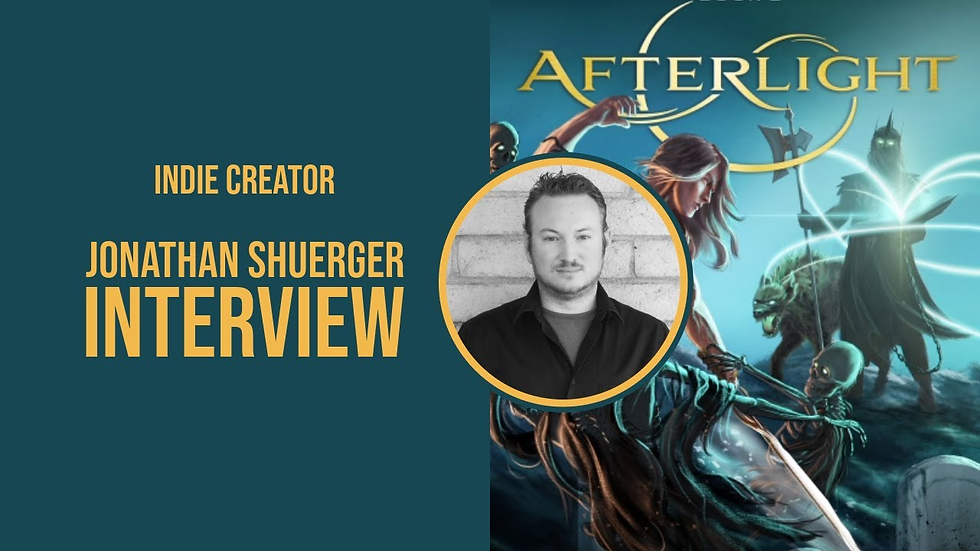
An indie author who explicitly brands his work around military realism, delivering small-unit engagements where fear, triage, and command friction carry as much weight as firepower.
Background Expertise
Shuerger positions himself explicitly as an author of "fantasy and military fiction" whose brand is "dark fantasy, military realism, and post-apocalyptic thrills." This framing reflects close, sustained engagement with modern military practice, tactics, and the human cost of combat.
Notable Works
His body of work spans fantasy military and post-apocalyptic series—indie-published fiction that promises and delivers military realism as a core feature of the reading experience.
How Realism Appears in the Writing
Shuerger's novels lean into small-unit engagements where the procedural aspects of fighting—movement, fields of fire, command friction—are foregrounded rather than abstracted. The emotional toll of combat receives equal attention: fear responses, triage decisions, and the physical degradation of the human body under sustained danger are treated as central narrative elements. His work reflects familiarity with real battlefield accounts and the documented physiological and psychological responses to prolonged combat stress.
Why Their Action Scenes Feel Real
Small-unit tactics—movement, fields of fire, command friction—are depicted procedurally
Fear, triage, and emotional toll are treated as narrative-shaping forces, not afterthoughts
Physical degradation under sustained danger is progressive and realistic
Military realism is an explicit, branded commitment—not incidental texture
Frequently Asked Questions
What are the best indie fantasy authors for realistic combat?
Top indie fantasy authors known for realistic combat include Izaic Yorks (professional athlete and saber practitioner), Alexander Darwin (BJJ brown belt), Matthew Woodring Stover (Jeet Kune Do–concept practitioner), and Jonathan Shuerger (military realism specialist). Each brings verifiable real-world fighting or athletic expertise directly into their fiction, producing action scenes grounded in biomechanics, fatigue, and tactical decision-making.
Why does real martial arts training improve fiction writing?
Authors who train in martial arts understand timing, distance management, energy depletion, and the psychological pressure of real fighting. This allows them to write action scenes where fatigue accumulates realistically, technique degrades under stress, and tactical decisions carry genuine consequences—details that untrained writers typically miss or abstract away.
How does physiology affect fight choreography in novels?
Physiology governs how long a character can sustain high-intensity combat (anaerobic thresholds), how injuries impair movement and cognition, and how recovery between engagements actually works. Authors with athletic or physiological backgrounds—like Izaic Yorks, a professional-level runner—write fights where lactic acid buildup, oxygen debt, and progressive muscle fatigue shape both the progression and outcome of combat.
What makes sci-fi combat scenes believable?
Believable sci-fi combat respects physics, logistics, and human limitations even within advanced technology. Key factors include realistic weapon effects, communication and sensor delays, supply constraints, and the psychological toll of fighting. Authors with military or engineering backgrounds—such as David Drake, Travis S. Taylor, and Marko Kloos—ground futuristic warfare in real tactical doctrine and physical law.
Which sci-fi authors have actual military experience?
David Drake is a Vietnam War veteran whose armored-cavalry service directly informs his Hammer's Slammers series. Marko Kloos brings deep military-culture familiarity and small-unit tactical knowledge to his Frontlines novels. Jonathan Shuerger explicitly brands his fiction around military realism, and Izaic Yorks holds training in military saber and smallsword.
What is the Combat Codes series about?
Alexander Darwin's Combat Codes Saga is a fantasy series centered on the Grievar, professional fighters who settle political disputes through hand-to-hand combat in an arena called the Circle. Fights are structured like realistic MMA and BJJ bouts—featuring guard work, submissions, positional hierarchy, and energy management—drawn directly from Darwin's twelve-plus years of Brazilian Jiu-Jitsu training and teaching.
How do authors write realistic sword fighting in fantasy?
Authors with historical fencing or bladed-weapon training write sword combat built on positional advantage, line control, feints, and binds rather than wide cinematic swings. Izaic Yorks, who practices military saber and smallsword, choreographs blade encounters around range management, the distinction between committed and probing attacks, and the progressive physical toll of sustained exchanges—producing fight scenes that read like trained bouts rather than movie choreography.
What indie sci-fi books have the best space combat?
Scott Westerfeld's The Risen Empire and The Killing of Worlds are frequently cited for thoughtful relativistic space combat governed by real physics. Neal Asher's Agent Cormac series delivers detailed ship-to-ship and drone warfare with hard-SF constraints. Travis S. Taylor's One Day on Mars combines mech combat and orbital engagements grounded in his professional background in theoretical physics and weapons research.
© 2026 — Compiled for readers who demand action scenes that respect the physics.
P.S: An article focusing on women - 10 Indie Fantasy & Sci-Fi Authors With Combat Expertise Who Write the Most Realistic Action Scenes


Comments